
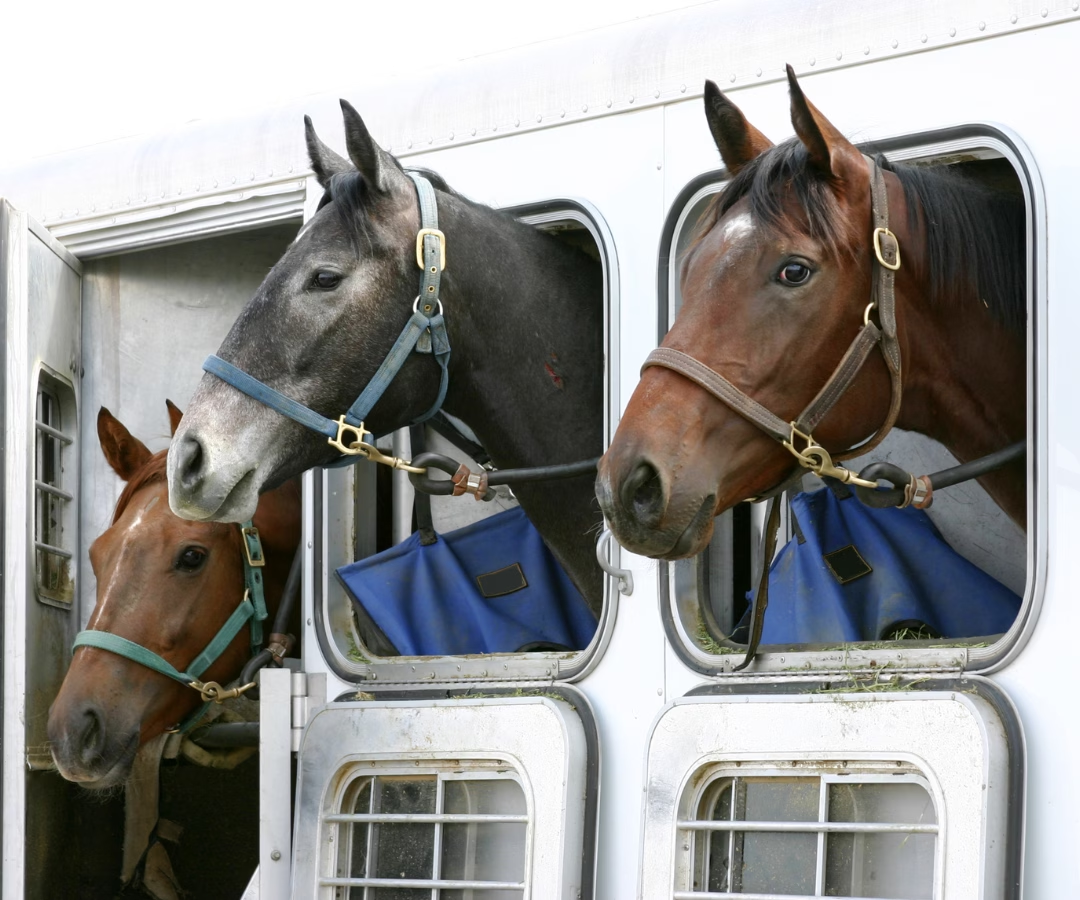
Navigating the horse trailer loan application, with its credit checks, income verifications, and rate comparisons, can feel like a challenge. This guide simplifies the process, breaking down every essential requirement, walking you through each step, comparing loan types, and sharing proven strategies for success. You’ll learn how your credit score and debt-to-income ratio impact approvals, what documents you’ll need, and how to present your application for swift, favorable financing. Discover how Elite Direct Finance’s network of lenders and our soft credit-pull pre-qualification make your journey to trailer ownership smoother.
What Are the Key Requirements for a Horse Trailer Loan Application?
Before approving your horse trailer loan, lenders carefully assess several key factors: your credit score, debt-to-income (DTI) ratio, evidence of steady income, the size of your down payment, and the trailer itself serving as collateral. Understanding each of these elements will help you assemble a complete application that meets lender expectations.
What Credit Score Is Needed to Qualify for a Horse Trailer Loan?
Your credit score is a crucial indicator of your repayment history and significantly influences your interest rates and chances of approval. Most lenders require a minimum FICO score between 675 and 700, with the best rates reserved for scores above 730. By consistently making on-time payments and reducing your credit utilization, you can directly improve your score and secure a lower APR.
| Credit Score Range | Typical Rate Impact | Approval Odds |
|---|---|---|
| 650–674 | Higher rates (8–12% APR) | Moderate |
| 675–729 | Competitive rates (6–8% APR) | Good |
| 730+ | Lowest rates (4–6% APR) | Excellent |
Paying down balances and addressing any errors on your credit report before applying can boost your score and unlock more advantageous financing terms.
How Does Debt-to-Income Ratio Affect Your Horse Trailer Loan Approval?
Your DTI ratio is calculated by dividing your total monthly debt payments by your gross monthly income. Lenders typically prefer a DTI below 40% to ensure you can comfortably manage new loan payments. To calculate your DTI, sum up all your recurring monthly debts (like rent, credit card payments, and existing loans) and divide by your pre-tax income. A lower DTI ratio demonstrates stronger repayment capacity and often leads to more favorable loan terms.
Requirements for Horse Trailer Financing
Financing for horse trailers often comes with more stringent lending criteria compared to standard auto or mortgage loans, as they are frequently categorized as higher-risk recreational assets. Most lenders typically seek credit scores of 700 or higher, with some preferring scores of 730+, and generally require debt-to-income ratios to be below 40% for approval.
This insight directly supports the article’s focus on the specific, and often more demanding, credit score and debt-to-income ratio requirements for horse trailer loans, underscoring their classification as higher-risk recreational purchases.
Reducing your DTI by paying off high-interest debts or increasing your documented income can give you a significant advantage in the approval process.
What Income and Employment Documents Are Required for Application?
Proving you have a stable income is essential. If you’re employed, you’ll typically need to provide recent pay stubs, W-2 forms, and contact information for your employer. Self-employed individuals usually need to submit two years of business tax returns and bank statements. Consistent and clear documentation helps demonstrate reliable earnings and speeds up the underwriting process.
How Does a Down Payment Impact Your Horse Trailer Loan Terms?
Making a down payment shows lenders your commitment and reduces the total amount you need to finance. Down payments typically range from 10% to 20% of the trailer’s price. While a 10% down payment might be sufficient for approval, a 20% down payment often results in lower APRs and may even waive certain fees. Investing more upfront reduces your monthly payments and the overall interest you’ll pay over the life of the loan.
Impact of Loan Type and Down Payment on Financing Terms
Secured loans, which utilize an asset like a vehicle or trailer as collateral, generally offer lower interest rates and more favorable terms due to reduced lender risk. Conversely, unsecured loans, which lack collateral, often come with higher interest rates. Furthermore, a larger down payment significantly decreases the loan principal, lowers monthly payments, and can lead to better interest rates and improved loan approval odds by demonstrating borrower commitment and reducing default risk.
This information reinforces the article’s explanation of how secured loans offer better terms due to collateral and how a substantial down payment positively influences loan affordability and approval by mitigating lender risk.
What Role Does the Horse Trailer Collateral Play in Secured Loans?
In secured loans, the trailer serves as collateral, giving the lender the right to repossess it if you fail to make payments. This reduces the lender’s risk, typically leading to longer loan terms (up to 240 months) and lower interest rates. Understanding the collateral requirements—such as lien filings and insurance coverage—will ensure a smooth approval and funding process.
How Do You Apply for a Horse Trailer Loan? Step-by-Step Application Process
The financing application process typically involves four key stages: pre-qualification, full application submission, lender matching, and final approval with funding. Following each step carefully can expedite the decision-making process and prevent unexpected issues.
Start by exploring pre-qualification options using a soft credit inquiry, then prepare and submit a complete application package. After reviewing matched offers, select the best one, sign the necessary paperwork, and arrange for funding.
How Does Pre-Qualification with a Soft Credit Pull Work?
Pre-qualification utilizes a soft credit pull, which means it won’t impact your credit score. It provides estimated interest rates and loan amounts based on basic information you provide, such as your credit score, income, and the desired loan amount. This low-impact inquiry allows you to compare options without any commitment.
What Documents Are Needed for the Full Loan Application?
Gathering your documents in advance can prevent delays. You will typically need:
- A government-issued ID (like a driver’s license or passport)
- Proof of your current address (a utility bill or lease agreement)
- Recent pay stubs or tax returns
- Bank statements covering the last two to three months
- The purchase agreement or invoice for the trailer
How Are Lenders Matched and Loan Offers Reviewed?
Once you submit your application, Elite Direct Finance’s network algorithm compares your profile against the criteria of multiple lenders. You’ll then receive a selection of offers presented side-by-side, detailing APRs, loan terms, and any associated fees. Comparing these offers empowers you to choose the most financially advantageous financing.
What Happens During Approval and Funding?
After you accept an offer, the final underwriting stage involves verifying your employment, income, and the collateral. Once approved, funds are typically disbursed directly to the trailer dealer or seller, often within 24–48 hours. For secured loans, the lender will place a lien on the trailer and require proof of insurance before releasing the payment.
What Types of Horse Trailer Loans Are Available?
Horse trailer financing generally falls into three main categories: secured loans, unsecured loans, and personal loans. Each type has distinct characteristics regarding collateral, interest rates, and flexibility.
Secured loans use the trailer as collateral, which typically allows for lower interest rates and longer repayment terms. Unsecured loans do not require collateral but usually come with higher interest rates and shorter repayment periods. Personal loans, offered by banks or online lenders, can be used to purchase a trailer but often share the characteristics of unsecured loans.
| Loan Category | Collateral Requirement | Interest Rate Range | Typical Term Length |
|---|---|---|---|
| Secured | Trailer | 4–8% APR | 60–240 months |
| Unsecured | None | 8–15% APR | 24–84 months |
| Personal (RV) | Varies | 7–12% APR | 36–120 months |
Selecting the right loan type that aligns with your repayment capacity, budget, and ownership goals is key.
How Can You Optimize Your Horse Trailer Loan Application for Approval?
To strengthen your application, focus on proactive credit management, reducing your DTI ratio, meticulously preparing your documents, and strategically selecting your lender.
Before applying for your horse trailer loan, aim to improve your credit score by paying bills on time, disputing any inaccuracies on your report, and lowering your credit card balances. Reducing your DTI ratio by paying off smaller debts or increasing your documented income can significantly boost lender confidence. Organize all required paperwork in clearly labeled folders to avoid missing anything. Finally, choosing a lender experienced in recreational vehicle financing—like the network available through Elite Direct Finance—can streamline underwriting and provide more competitive terms.
What Are Common Pitfalls in Horse Trailer Loan Applications and How to Avoid Them?
Even well-qualified applicants can face loan denials if they overlook certain details. Be sure to avoid these common pitfalls:
- Incomplete documentation, such as missing tax returns or proof of insurance
- Taking on new debts before your loan is finalized, which can negatively impact your DTI
- Failing to secure proper lien waivers or title assignments
- Ignoring rate-lock deadlines, which could result in higher APRs
- Underestimating additional fees, including origination, processing, and closing costs
By carefully reviewing your application packet and staying aware of timeline commitments, you can minimize potential obstacles and maintain positive momentum toward approval.
How Do Horse Trailer Loan Rates and Terms Affect Your Financing?
Interest rates and repayment periods directly influence your monthly payments and the total cost of borrowing. Longer loan terms spread your payments over more months, which lowers your monthly obligation but increases the total interest paid. Conversely, shorter terms result in higher monthly payments but save you money on interest over time.
| Term Length | Monthly Payment Impact | Total Interest Paid Effect |
|---|---|---|
| 60 months | Higher monthly obligation | Lower cumulative interest |
| 120 months | Moderate monthly obligation | Moderate cumulative interest |
| 240 months | Lowest monthly obligation | Highest cumulative interest |
Choosing a term that balances your monthly cash flow with the overall financing cost is essential for a sustainable ownership plan.
What Financing Options Exist for Borrowers with Bad Credit or Special Situations?
Yes, borrowers with less-than-perfect credit can still find horse trailer financing options, although they may vary. Many lenders in specialized networks consider subprime applications by requiring larger down payments (20–30%), a co-signer, or slightly higher APRs. Bridge financing or dealer financing might also be available, but it’s crucial to compare all offers and fee structures carefully.
Elite Direct Finance is committed to assisting applicants with diverse credit profiles by connecting them with lenders who specialize in subprime and near-prime loans. Our flexible criteria and soft credit-pull pre-qualification process help applicants understand potential terms before making any commitments.
How Can You Use Tools to Estimate and Manage Your Horse Trailer Loan Payments?
A loan payment calculator is an invaluable budgeting tool that helps you determine your monthly obligations based on the loan amount, interest rate, and term length.
By experimenting with different scenarios—adjusting down payments, interest rates, or term lengths—you can visualize how each factor impacts your budget.
Key inputs for accurate estimates include:
- The principal loan amount you desire
- Your anticipated APR
- Your proposed repayment duration
What Frequently Asked Questions Do Borrowers Have About Horse Trailer Loans?
Borrowers commonly inquire about minimum credit score requirements, options for bad credit, necessary paperwork, the difficulty of approval, and down payment expectations. Most lenders prefer scores above 675, but specialized networks can approve subprime applicants with larger down payments or co-signers. Standard documentation includes proof of income, personal identification, bank statements, and the trailer purchase invoice. While approval rates can vary, thorough preparation and selecting the right lender network can significantly simplify the process. Typical down payments range from 10% to 20%, directly influencing the loan size and total interest expense.
Understanding these common questions will help you approach the application process with greater confidence and clarity.
Securing the right horse trailer loan depends on presenting a strong application and partnering with knowledgeable lenders. By mastering credit requirements, organizing your documentation, and comparing tailored offers through Elite Direct Finance’s extensive network, you’ll navigate the financing process with ease and enjoy your new trailer with complete peace of mind.
Ready to explore personalized financing options for your next horse trailer? Visit Elite Direct Finance to start your soft credit-pull pre-qualification today.