
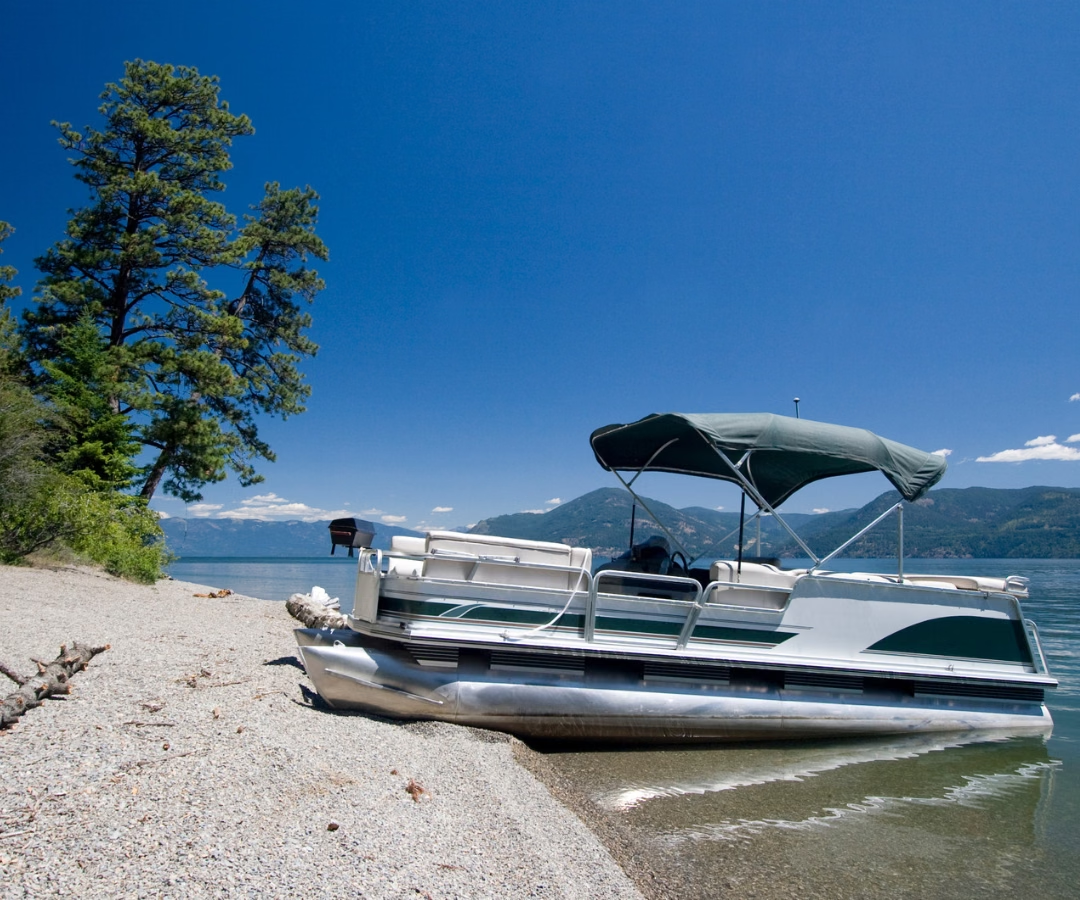
A pontoon is one of the easiest ways to get a family on the water. It is stable, roomy, simple to drive and easy to tow. Most buyers finance one rather than paying cash, and a pontoon boat loan works much like any other secured boat loan, with a few details that are worth understanding before you shop.
This guide covers how pontoon financing works, what a loan can include, how new and used pontoons are treated differently, what to budget beyond the payment, and how to see where you stand before you visit a dealer or call a private seller.
How Does a Pontoon Boat Loan Work?
A pontoon boat loan is an installment loan secured by the boat. You borrow the purchase price minus your down payment, repay it in fixed monthly payments over a set term, and the lender holds a lien on the title until the loan is paid off. Because the pontoon is the collateral, a secured loan usually carries a lower rate and a longer term than an unsecured personal loan. If you want the full comparison, see our guide to secured and unsecured boat loans.
Lenders look at two things when they price a pontoon loan:
- You: credit history, income, existing debt and the size of your down payment.
- The boat: its age, condition, value, engine and whether it is new from a dealer or used from a dealer or private seller.
Your rate, term and approval amount come from how those two pieces fit together. Strong credit on an older pontoon can still mean a shorter term, and a brand-new pontoon will not offset a profile a lender considers risky.
What Makes Pontoon Financing Different?
The loan process matches any other boat, but pontoons have traits that shape how a lender views the deal.
- Pontoon vs. tritoon: A traditional pontoon rides on two aluminum tubes. A tritoon adds a third center tube for more stability, more speed and higher horsepower ratings. Tritoons usually carry a higher price, which affects your loan amount and payment.
- Outboard power: Nearly every pontoon runs an outboard, and the engine is a large share of the price. The horsepower you choose changes the total you finance. Our breakdown of inboard and outboard engines explains the tradeoffs.
- Options add up fast: Upgraded seating, a bimini or arch, a sound system, a ski tow bar and a performance package can move a base model price considerably. Decide what you need before you set a loan amount.
- Strong used market: Pontoons are popular, simple boats, so plenty of them change hands used and private-party. That makes valuation and title verification a bigger part of the process.
What Can a Pontoon Loan Cover?
When a pontoon is sold as a package, the loan can often cover more than the hull. Depending on the lender and the deal, financing may include:
- The pontoon or tritoon itself
- The outboard engine sold with the boat
- A trailer sold with the boat
- Factory and dealer-installed options
Ask for an itemized buyer’s order before you finalize the loan amount, so you know exactly what you are financing. Items bought separately later, such as accessories or gear, are typically not part of the original loan.
How Long Can You Finance a Pontoon Boat?
Through Elite’s lender network, boat loan terms run up to 20 years. The term you are offered depends on the loan amount, the age and type of the boat, and your credit profile. Larger loans on newer boats generally qualify for the longest terms, while smaller loans and older boats tend to come with shorter ones.
A longer term lowers the monthly payment but raises the total interest you pay. Here is how that plays out on the same loan:
| Term | Monthly Payment | Total Interest | Total Paid |
|---|---|---|---|
| 10 years | $606.64 | $22,797 | $72,797 |
| 15 years | $477.83 | $36,009 | $86,009 |
| 20 years | $418.22 | $50,373 | $100,373 |
Example only: $50,000 financed at a hypothetical 8.00% APR. This is not a rate quote. Your actual rate and terms depend on your credit, the boat and the lender.
Run your own numbers with our boat loan calculator to compare terms and down payments side by side. For more on choosing a term, read how long you can finance a boat.
How Much Should You Put Down?
Most lenders expect some money down on a pontoon. A larger down payment lowers your monthly payment, reduces the interest you pay and protects you from owing more than the boat is worth in the first few years. It also matters more on a used or older pontoon, where lenders want more of your equity in the deal.
A trade-in can count toward your down payment. If you still owe on the boat you are trading, the payoff is handled as part of the new purchase.
Financing a New vs. Used Pontoon
New Pontoons
New pontoons are the simplest to finance. The value is clear from the buyer’s order, there is no title history to untangle and the boat comes with a manufacturer warranty. Elite partners with Bentley Pontoons, and we work with buyers financing new pontoons from a wide range of builders.
Used Pontoons
Used pontoons can be a smart buy, but expect the lender to look harder at the boat:
- Value: Lenders base the loan on the boat’s market value, not just the asking price. Check NADA boat values before you negotiate.
- Age: Older boats may qualify for shorter terms or may fall outside some lenders’ guidelines.
- Condition: Tube damage, corrosion, soft decking and engine hours all affect value. A marine survey or an independent inspection is worth the cost on larger purchases.
- Title and liens: The seller’s title must be clean, and any existing loan has to be paid off at closing.
Buying From a Private Seller
A lot of used pontoons sell between individuals. Many banks and dealers will not finance a private-party sale, but a broker can place that loan with a lender that does. The process adds a few steps: verifying the hull identification number, confirming the title, paying off any lien and transferring registration. Our step-by-step guide to financing a boat from a private seller walks through each one.
What Do Lenders Look at in Your Application?
- Credit history: Your score and payment history drive your rate and the terms you are offered.
- Debt-to-income ratio: Lenders want to see that the new payment fits alongside your existing obligations. Learn how it is calculated in our debt-to-income guide.
- Income and employment: Recent pay stubs or tax returns, especially if you are self-employed.
- Down payment: How much of your own money is in the deal.
- The boat: Purchase agreement, year, make, model, hull identification number and engine details.
For a deeper look at each factor, read our full guide to boat loan eligibility.
Budget for the Full Cost of Ownership
The loan payment is only part of what a pontoon costs each month. Before you settle on a price range, account for:
- Insurance: Lenders require coverage on a financed boat. Elite can help you find boat insurance alongside your loan.
- Storage: A slip, dry storage, a lift or space at home for the trailer.
- Maintenance: Engine service, winterization where needed, and cleaning and protecting the tubes and upholstery.
- Fuel, registration and trailer upkeep.
Leaving room for these costs keeps your boat a pleasure rather than a strain.
Why Work With a Broker on a Pontoon Loan?
Elite Direct Finance is a broker, not a single lender. Instead of one bank’s yes or no, your application is matched against a network of lenders that finance recreational boats. That helps most when your situation does not fit a standard box, such as an older pontoon, a private-party purchase or a credit profile that one lender passes on but another will consider.
Pre-qualifying is a soft inquiry, so it does not affect your credit score. You will know where you stand before you negotiate, which puts you in a stronger position with a dealer or seller. If you are unsure how pre-qualification differs from a full approval, read pre-qualified vs. pre-approved.
Pontoon Boat Loan FAQs
Can you get a loan for a used pontoon boat?
Yes. Used pontoons are financed regularly. Lenders base the loan on the boat’s market value, and its age and condition can affect the term and down payment. Older boats may qualify for shorter terms or fall outside some lenders’ guidelines.
How long can you finance a pontoon boat?
Through Elite’s lender network, boat loan terms run up to 20 years. The term you qualify for depends on the loan amount, the boat’s age and type, and your credit profile. Smaller loans and older boats generally come with shorter terms.
Can a pontoon loan include the motor and trailer?
Often, yes. When the engine and trailer are sold as a package with the pontoon, they can typically be included in the loan amount. Ask for an itemized buyer’s order so you know exactly what is being financed.
Can I finance a pontoon from a private seller?
Yes. Many banks and dealers do not finance private-party sales, but a broker can place the loan with a lender that does. The process includes verifying the hull identification number, confirming a clean title and paying off any existing lien at closing.
Does pre-qualifying for a pontoon loan affect my credit score?
No. Pre-qualifying with Elite Direct Finance is a soft inquiry and does not affect your credit score.
See What You Qualify For on a Pontoon
Pre-qualify in minutes with Elite Direct Finance with no impact to your credit score, then shop with your numbers in hand. Get pre-qualified.